
Hometown Custom Carts
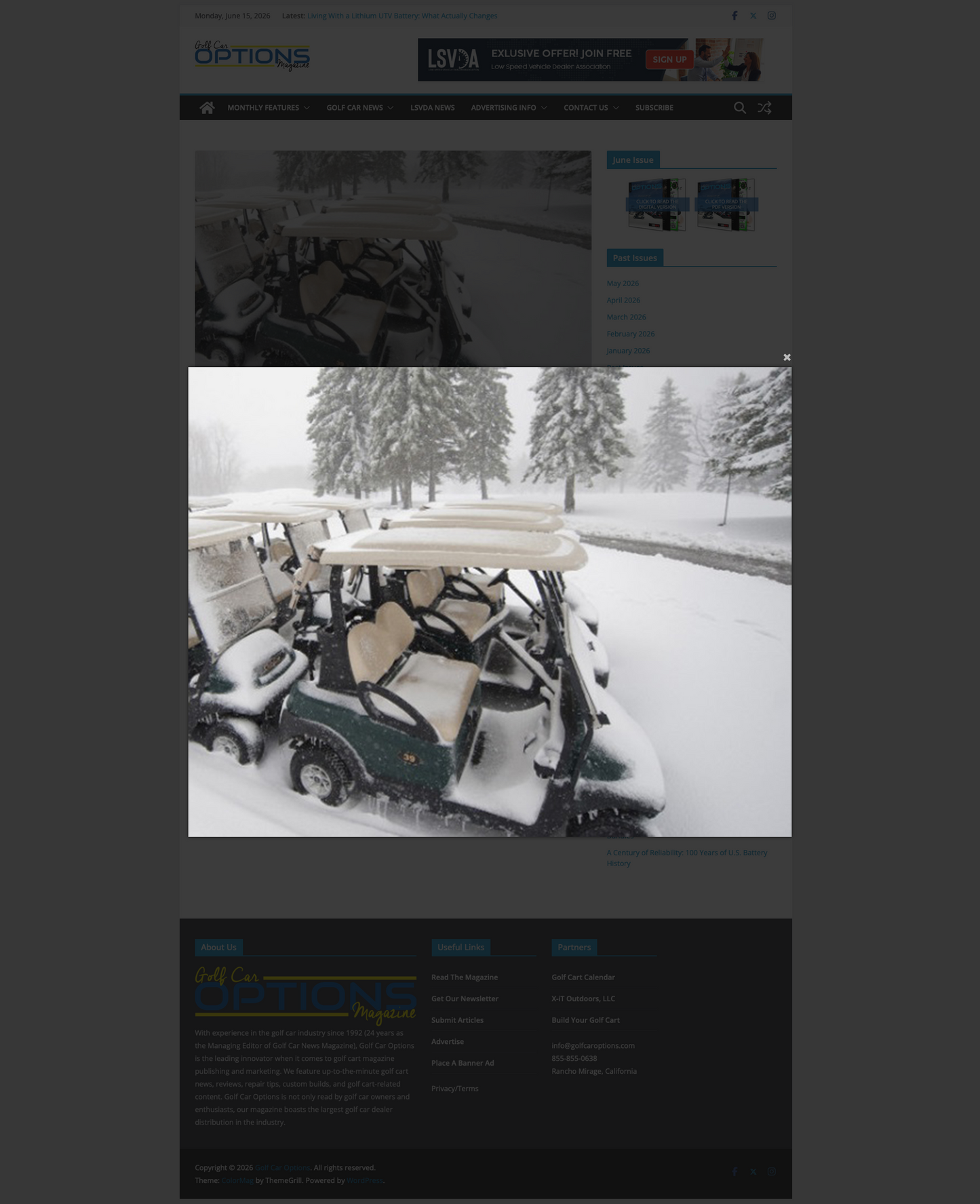
Winterizing Your Electric Golf Cart - lead acid batteries
Winterizing Your Electric Golf Cart - lead acid batteries
Couldn't load pickup availability
Proper winter storage helps extend battery life and keeps your golf cart ready for spring. Follow the steps below
before storing your cart for the season.
1. Clean the Golf Cart
Wash the cart thoroughly to remove dirt, mud, and road salt. Dry the cart completely and clean underneath the cart and around the battery compartment.
2. Inspect the Batteries
Check battery terminals for corrosion. Clean terminals using a battery terminal cleaner or a baking soda/water solution. Tighten any loose connections.
3. Check Water Levels (Flooded Lead-Acid Batteries Only)
Add distilled water if needed. Fill only to the recommended level and do not overfill.
4. Fully Charge the Battery Pack
Charge the batteries completely before storage. Never store batteries in a discharged state.
5. Use a Battery Maintainer
Connect a proper golf cart battery maintainer during storage. Use a maintainer designed for your cart’s total voltage.
6. Place Run/Tow Switch in 'Tow'
If equipped, place the cart in Tow mode to help prevent electrical drain during storage.
7. Turn Off Accessories
Remove keys and turn off lights, radios, or added accessories.
8. Tire Care
Inflate tires to recommended pressure. Slightly overinflating by 2–3 PSI can help prevent flat spots.
9. Store in a Dry Location
Keep the cart indoors whenever possible. Use a breathable cover to protect from dust and moisture.
10. Periodic Winter Check
Inspect the cart monthly. Verify the maintainer is operating properly and check for rodent damage.
Important Notes
• Do not leave batteries completely discharged over winter.
• Do not use automotive battery chargers unless approved for deep-cycle batteries.
• Lithium battery carts may have different storage requirements — consult the manufacturer.
Spring Start-Up Checklist
1. Disconnect the battery maintainer.
2. Inspect battery terminals and cables.
3. Fully charge the batteries.
4. Check tire pressure.
5. Test brakes, lights, and steering before driving.
Share